
Get an itemised written quote before anything else, then verify the operator’s PSV licence and Driver CPC before paying a deposit. That order matters: a written quote sets the terms you’re agreeing to, and licence checks confirm the operator can legally deliver them. For school or vulnerable-passenger travel, add a DBS check to that list. Many established operators structure their enquiry process around exactly these three checks.
TL;DR:
Always obtain a detailed, itemised quote and verify the operator’s PSV license, insurance, and driver qualifications in writing before confirming payment or finalizing the booking.
Book accessible vehicles and staff assistance early, explicitly requesting vehicle layout plans, training evidence, and DBS checks for staff involved with vulnerable or underage passengers.
Secure bookings well in advance—at least two to four weeks for day trips and several months for multi-day or school trips—to increase availability and reduce costs.
Confirm driver and vehicle details, safety arrangements, and contingency plans at least 24 hours before departure to prevent last-minute confusion or delays.
Keep all written documentation of quotes, license checks, safeguarding policies, and final confirmations to resolve disputes quickly and avoid liability issues.
Table of Contents
-
How do you verify a coach operator’s licence and safety credentials?
-
What should you check for accessible and safeguarding transport?
-
What contract terms and payment practices should you insist on?
What are the steps in the coach booking process?
Booking coach or minibus hire for a group follows a predictable sequence, and skipping steps is where most disputes start.
Before contacting any operator, gather the details that shape both price and vehicle choice: exact dates and times, pick-up and drop-off points, confirmed passenger numbers (not estimates), luggage volume, and any accessibility requirements. Organisers frequently under-specify equipment such as sports kit or musical instruments, which can rule out a vehicle that looked suitable on paper. Luggage capacity should be stated explicitly in your first enquiry, not left for the operator to guess.
-
Send a detailed enquiry. Include dates, locations, passenger count, luggage, and accessibility needs.
-
Request an itemised quote. It should break down vehicle type, driver hours, mileage, waiting time, extras, VAT, and any parking or toll charges. A single lump-sum figure hides where costs come from and makes comparison between operators nearly impossible.
-
Ask for evidence before you commit. Operator licence details, insurance certificates, and driver qualifications should arrive in writing. Reputable operators supply these without hesitation, and reluctance to share them is itself a warning sign.
-
Confirm and pay the deposit. Once satisfied, agree the deposit amount, the balance due date, and get written confirmation of the named driver, vehicle registration, and full itinerary.
This sequence protects you at both ends: the paperwork stage catches unsuitable or unlicensed operators early, and the confirmation stage removes ambiguity about what’s actually been booked. Treat any operator who rushes you past step three as a reason to look elsewhere.
How do you verify a coach operator’s licence and safety credentials?
Every operator carrying fare-paying passengers in the UK must hold a valid PSV operator’s licence, and you can check that licence on the DVSA public register in a few minutes. Look for the operator’s trading name, licence status, and whether any undertakings or enforcement action appear against the record. A clean history on the register is one of the strongest indicators of a well-run fleet.
Run through this checklist before confirming any booking:
-
Confirm the operator’s PSV licence is active on the DVSA register, with no unresolved undertakings.
-
Ask drivers to hold a Category D licence and a valid Driver CPC, and request written confirmation rather than assuming it.
-
Get written proof of public liability and passenger insurance cover.
-
For school or youth trips, insist on enhanced DBS checks for any staff who supervise or assist passengers.
-
Ask whether the operator holds a BUSK safety rating or similar independent benchmarking.
Pro Tip: Category D licence and Driver CPC are two separate qualifications. A driver can hold one without the other, so ask for both, not just “a licence”.
Price alone should never decide a safety-critical booking. Operators who maintain vehicles more frequently and train drivers to a higher standard typically charge more, and that premium usually buys fewer surprises on the day.
How far in advance should you book a coach?
Lead time affects both availability and price, and the margin for error shrinks the closer you get to term-time or peak season.
-
Day trips and one-off events: book at least two to four weeks ahead where possible.
-
Term contracts (home-to-school transport): confirm well before the new term, ideally months in advance, to secure consistent vehicles and drivers.
-
Multi-day tours: allow several months, particularly across school holiday periods when demand spikes.
-
Accessible vehicles: book earlier than a standard coach, since wheelchair-adapted vehicles are a smaller portion of most fleets and get reserved quickly.
Mid-week and off-peak travel tends to bring better availability and lower per-head charges than weekend or holiday-period trips, according to group travel planning guidance. Leaving a booking late doesn’t just risk higher rates. It narrows your choice of vehicle size, layout, and accessible provision right when you need flexibility most.
What should you check for accessible and safeguarding transport?
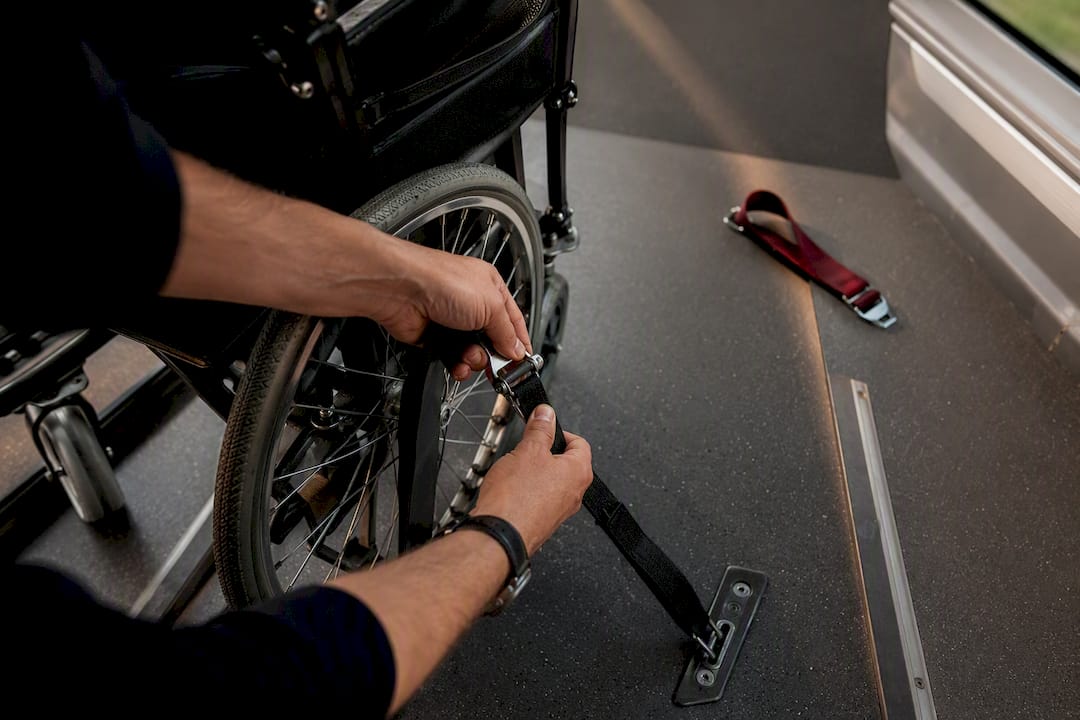
Accessible provision needs to be verified on paper, not assumed from a brochure photo. Ask the operator for a vehicle layout plan showing wheelchair positions, securing points, and the passenger route from door to seat. Confirm that staff are trained in assistance and securement procedures, and ask for evidence of that training rather than a verbal assurance.
For school trips or any journey involving vulnerable passengers, an enhanced DBS check on relevant staff is essential, and organisers should request it directly rather than assume it’s already in place. A DBS check alone doesn’t confirm competence with handling equipment or assisting passengers with mobility needs, so pair it with a written safeguarding policy and evidence of practical training.
-
Request the vehicle layout plan showing wheelchair spaces and securement points.
-
Confirm staff assistance training and ask for supporting evidence.
-
Insist on enhanced DBS checks and a written safeguarding policy for any trip involving under-18s or vulnerable adults.
-
Brief passengers and guardians beforehand on boarding order, restraint use, and emergency contact details.
Pro Tip: Send a short written briefing to parents or guardians covering boarding, seatbelt use, and who to contact on the day. It prevents a dozen last-minute phone calls to the school office.
What contract terms and payment practices should you insist on?
A typical booking involves a deposit at confirmation, with the balance due closer to travel, usually a set number of days before departure. Insist on an itemised invoice at each stage so you can see exactly what you’re paying for and query anything that looks off before it becomes a dispute.
Before signing anything, check the contract covers:
-
Amendment and cancellation terms, including how refunds or credits are calculated.
-
Breakdown and replacement vehicle obligations, so you know what happens if the coach fails mechanically.
-
Liability allocation in the event of delay, damage, or incident.
-
Force-majeure provisions covering severe weather, strikes, or other disruption outside either party’s control.
Operators with clear, written amendment and cancellation policies tend to generate far fewer disputes than those working on verbal agreements. Keep every confirmation email, invoice, and amendment in one file. If a complaint or an audit ever arises, that paper trail is what settles it quickly rather than dragging on for weeks.
What should you check on the day of travel?
The final 24 to 48 hours before departure are where most avoidable problems surface, and a short checklist closes most of the gaps.
-
Confirm driver and vehicle details at least 24 hours before departure, including the driver’s name, vehicle registration, and a direct contact number.
-
Brief passengers on seatbelt use, luggage placement, supervision arrangements, and what to do in an emergency.
-
Agree a contingency plan for breakdowns or delays: who the group leader calls, what backup transport looks like, and how you’ll update parents, staff, or attendees.
-
Record everything afterwards. Log any incidents, damage, or delays, and reconcile the final invoice against the original itemised quote.
Getting named driver and vehicle details in writing ahead of time removes the single biggest source of day-of confusion, particularly for groups managing dozens of passengers at a pick-up point.
Supplier perspective: what organisers get wrong
Most booking problems trace back to vague specifications, not bad luck. When in doubt on numbers, book one size up and confirm the final headcount 48 hours before travel rather than on the morning itself. Put luggage allowances and any special needs in writing at enquiry stage, since verbal assumptions rarely survive contact with a loaded coach. And always request named driver and vehicle information 24 hours ahead. It’s a small ask that prevents a surprisingly large share of day-of disruption.
— Cozys
Request a quote from Cozy Travel
Some coach operators run a fleet from 16 to 85 seats, covering services such as accessible transport for wheelchair users and home-to-school contracts for local authorities and private schools. Working with a supplier that publishes its credentials can simplify the verification process compared to compiling licence checks and vehicle specifications from several operators.
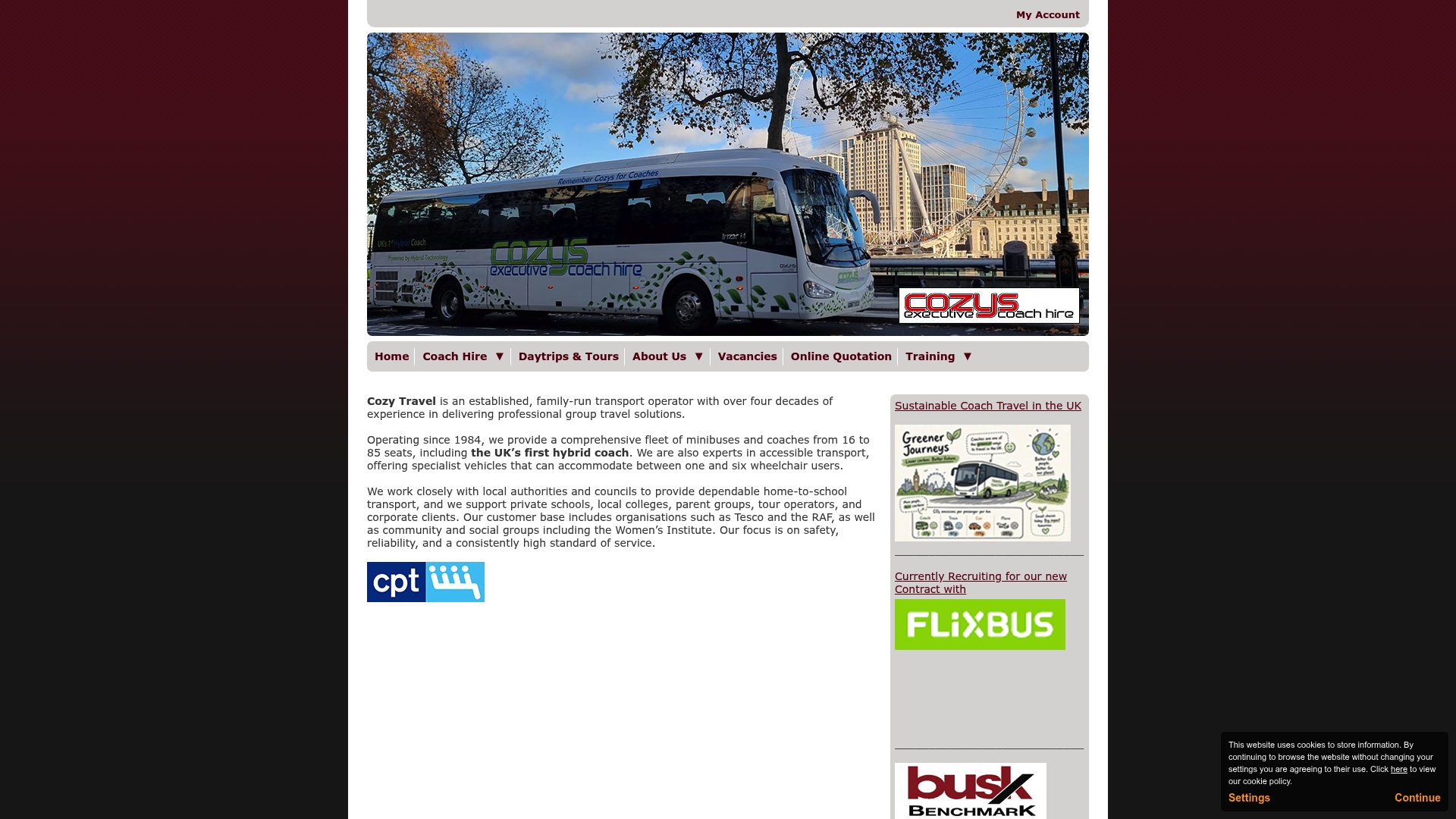
When you request a quote for coach hire, include your travel date, pick-up and drop-off points, exact passenger numbers, any accessibility needs, and luggage volume. That’s the same information the step-by-step process above recommends gathering first, so you’ll already have it to hand. For accessible bookings specifically, the accessible transport specialists page covers wheelchair-adapted vehicle options in more detail, and schools or councils arranging term-time routes can review home-to-school transport arrangements directly. Cozy Travel’s BUSK safety rating is published for exactly the kind of verification this guide recommends running on any operator.
Sources
FAQ
How long before travel should I book a coach?
For a one-off day trip, book two to four weeks ahead where possible; term contracts and multi-day tours need considerably longer, often several months. Accessible vehicles typically need extra lead time because adapted vehicles make up a smaller share of most fleets.
How do I check if a coach operator is legally licensed?
Search the operator’s name on the DVSA public register to confirm their PSV operator’s licence is active and free of unresolved undertakings. You should also ask the operator directly for written confirmation of their licence number before booking.
Do I need to ask about DBS checks for a school trip?
Yes. Enhanced DBS checks for staff supervising or assisting passengers should be requested explicitly for any school or youth travel, never assumed to be already in place. Ask for written confirmation alongside the operator’s safeguarding policy.
What information do I need to book a wheelchair-accessible coach?
You’ll need the number of wheelchair users travelling, wheelchair dimensions if known, pick-up and drop-off accessibility (kerb height, ramp access), and total passenger numbers. Cozy Travel’s accessible transport service can advise on suitable vehicle layouts once you provide these details.
What does Cozy Travel charge for coach hire?
Pricing depends on vehicle size, distance, and trip duration, so current rates are available by requesting a written quote directly. Provide your dates, passenger count, and accessibility needs to get an itemised figure rather than an estimate.