
Coaches must use St George's Field or Union Terrace as their main parking base in York, with York Racecourse operating a separate site for race days. Drop-off and pick-up is restricted to designated rendezvous points; stopping inside the city walls is not permitted except for limited authorised access. Council tariffs apply during the day, but parking is free overnight.
TL;DR:
- Coaches must park at designated sites such as St George's Field or Union Terrace, with capacity limits and specific hours; overflow arrangements require prior booking.
- Drop-off and pick-up are only permitted at three official rendezvous points, with waiting time generally limited to 15 minutes before moving to a coach park.
- Event days like races or Christmas markets have separate booking systems and restricted access, making early arrangements essential to secure parking or drop-off slots.
- Anti-idling enforcement is strict in York, so engines must be off immediately after parking to avoid penalty charges, especially when waiting outside designated areas.
- Accessibility is inconsistent, so operators should verify assistance arrangements in advance for wheelchair users, considering the varied terrain and site-specific conditions.
Table of Contents
- Where can coaches park in York? Official sites, capacity and charges
- Where can coaches drop off and pick up passengers in York?
- How do I book coach parking for York Racecourse or the Christmas market?
- What are the rules on idling and enforcement in York's coach parks?
- Operator checklist: what to confirm before you set off
- Are York's coach parks accessible for wheelchair users?
- What operators have learned from decades of group travel into historic cities
- Planning a group visit to York? Here's how Cozy can help
- Sources
- FAQ
Where can coaches park in York? Official sites, capacity and charges
Two council-run coach parks handle the bulk of visiting traffic, and each has its own quirks worth knowing before you plan a route.
St George's Field sits close to the city centre and offers 27 coach spaces. It's open 24 hours a day, though charges only apply between 08:00 and 18:00. Being on the Ouse floodplain, it carries a real risk: after heavy rain, the park can close temporarily while the council clears silt and debris, sometimes for several days. Always check for alerts before committing a group to this site.
Union Terrace offers slightly more room, with 35 coach spaces, and runs to a tighter daily window of 08:00 to 23:00. It shares the same daytime charging structure but has one physical constraint operators often miss: a 2.1m height restriction applies to the adjoining car park area, so check your vehicle's clearance if you're routing through that section. Both parks use CCTV and carry anti-idling notices.
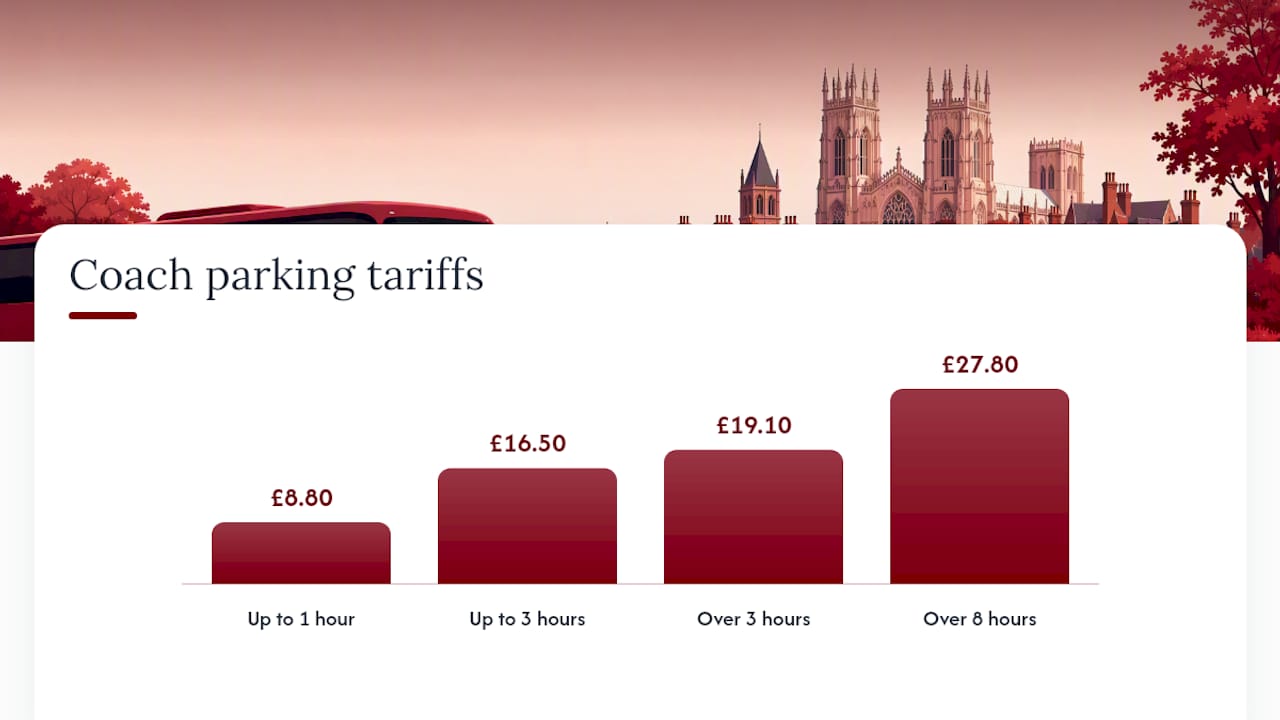
Tariffs are identical across both sites according to City of York Council:
- Up to 1 hour: £8.80
- Up to 3 hours: £16.50
- Over 3 hours: £19.10
- Over 8 hours: £27.80
Parking is free between 18:00 and 08:00 at both locations, which makes early morning arrivals or overnight stays considerably cheaper if your itinerary allows it. Payment is available by pay and display machine, phone, or card. Neither site is a place to switch on for a nap with the engine idling; keep reading, because that habit is exactly what draws enforcement attention in York.
Where can coaches drop off and pick up passengers in York?
York's medieval street plan wasn't built with 12-metre vehicles in mind, and the council has responded with a strict set of designated rendezvous points rather than allowing kerbside stops wherever convenient.
The three main rendezvous points are:
- Leeman Road, serving the railway station
- Fawcett Street, serving York Castle and Clifford's Tower
- Foss Bank, serving York Minster
Each point expects a short walk from drop-off to the actual attraction, so brief passengers on distances beforehand to avoid confusion or delay. Council guidance is explicit: coaches cannot stop or wait inside the city walls, and that includes the Lendal and Ouse bridges, both frequently mistaken for viable pause points by drivers unfamiliar with the city. The only exception is limited authorised access via Station Road and Lendal Arch, and that's not something to assume without checking first.
Waiting at a rendezvous point is typically tolerated for around 15 minutes for genuine set-down or pick-up. Beyond that, move to a coach park. Signage at each point confirms permitted activity, and it's worth briefing drivers on what that signage looks like before they arrive, since York's rendezvous markings differ from what operators see in most other UK cities.
How do I book coach parking for York Racecourse or the Christmas market?
Event days change the rules considerably, and getting caught out usually means missing a race or losing a parking slot altogether.
- York Racecourse race days. Coaches must use the racecourse's own dedicated coach park, accessed via Bishopthorpe Road. This facility is managed separately from the council sites, so St George's Field and Union Terrace bookings won't cover a race meeting. Contact the racecourse directly ahead of your visit to confirm access arrangements.
- York Christmas market weekends. Demand regularly outstrips supply on Saturdays and Sundays through the festive period. Visit York operates a booking system for these dates, and early booking is the only reliable way to guarantee a space.
- When council parks are full. Overflow options exist through private depots and yards, but these need pre-booking rather than an ad hoc arrival. Build a fallback into your planning rather than discovering the gap on the day.
What are the rules on idling and enforcement in York's coach parks?
Anti-idling isn't a suggestion in York; it's an active enforcement priority, and coaches are a visible target simply because of engine size and noise.
The core rules operators need to know:
- Switch the engine off once parked, even for a short stay. Idling in a coach park risks a Penalty Charge Notice.
- Dropping off or picking up outside a designated rendezvous point, or ignoring posted signage, can trigger enforcement action just as readily as illegal parking.
- Site-specific rules matter: Union Terrace's 2.1m height limit, St George's Field's flood closures, and any temporary restrictions during major events all carry their own penalties for non-compliance.
The council frames this plainly: improper stopping causes congestion in a city never designed for coach traffic, and it enforces accordingly. Reminding drivers in advance to cut engines the moment they park reduces PCN risk and keeps local air quality campaigns onside.
Pro Tip: Brief every driver on the anti-idling rule before departure, not on arrival. A five-minute reminder at the depot is far cheaper than a Penalty Charge Notice picked up while waiting for passengers to reboard.
Operator checklist: what to confirm before you set off
A few minutes of preparation avoids most of the problems operators run into on the day.
- Download the council's coach access and parking maps and share them with your driver before departure.
- Confirm your chosen park's opening hours and tariff, and check whether your visit date needs advance booking (race days and festive weekends both do).
- Check for St George's Field flood alerts and keep an overflow contact ready in case you need to redirect.
- Tell passengers the exact rendezvous point name and the walking time to their destination.
Pro Tip: If St George's Field is closed after flooding, your next move should be checking the council alert, calling the coach park hotline, and rerouting to Union Terrace or a pre-booked private yard. Build 20 to 30 minutes into your schedule for that kind of contingency; it rarely happens instantly.
Are York's coach parks accessible for wheelchair users?
Accessibility at York's coach parks is inconsistent enough that it needs checking on a case-by-case basis rather than assumed.
Neither St George's Field nor Union Terrace publishes a guarantee of dedicated ramps or step-free kerb access at every point within the site. Ground surfaces are generally hard-standing and manageable, but the distance from a parking bay to a dropped kerb or accessible pathway varies depending on where in the park a coach is directed to stop. The same applies at rendezvous points: Leeman Road, Fawcett Street and Foss Bank all sit on public pavements rather than purpose-built accessible boarding areas, so gradients and kerb heights differ from one to the next.
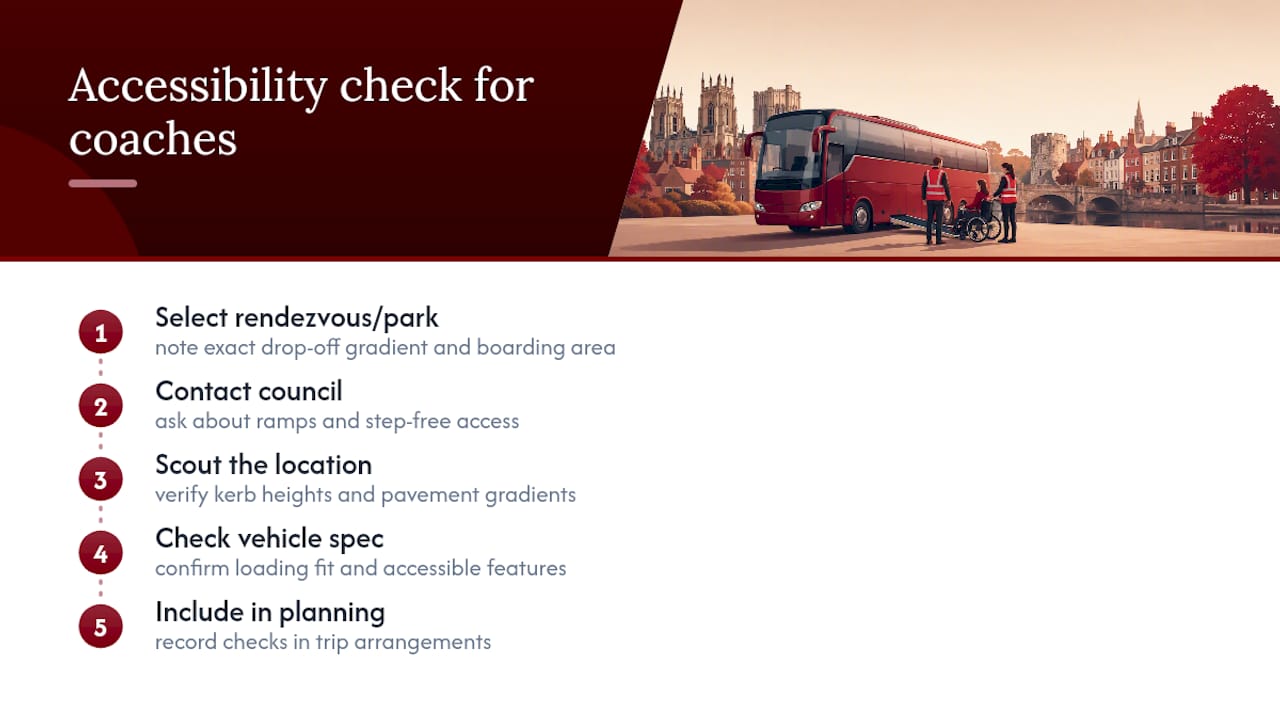
The practical answer is to confirm arrangements in advance rather than assume parity across sites. Operators carrying wheelchair users should establish the exact drop-off gradient and boarding area at their intended rendezvous or park before the visit, ideally by contacting the council or scouting the location on a prior trip. Groups organising a York visit for passengers with mobility needs are better served by building this check into planning from the outset, alongside confirming that the vehicle itself has the right accessible specification for both loading and the actual pavement conditions passengers will meet on arrival.
What operators have learned from decades of group travel into historic cities
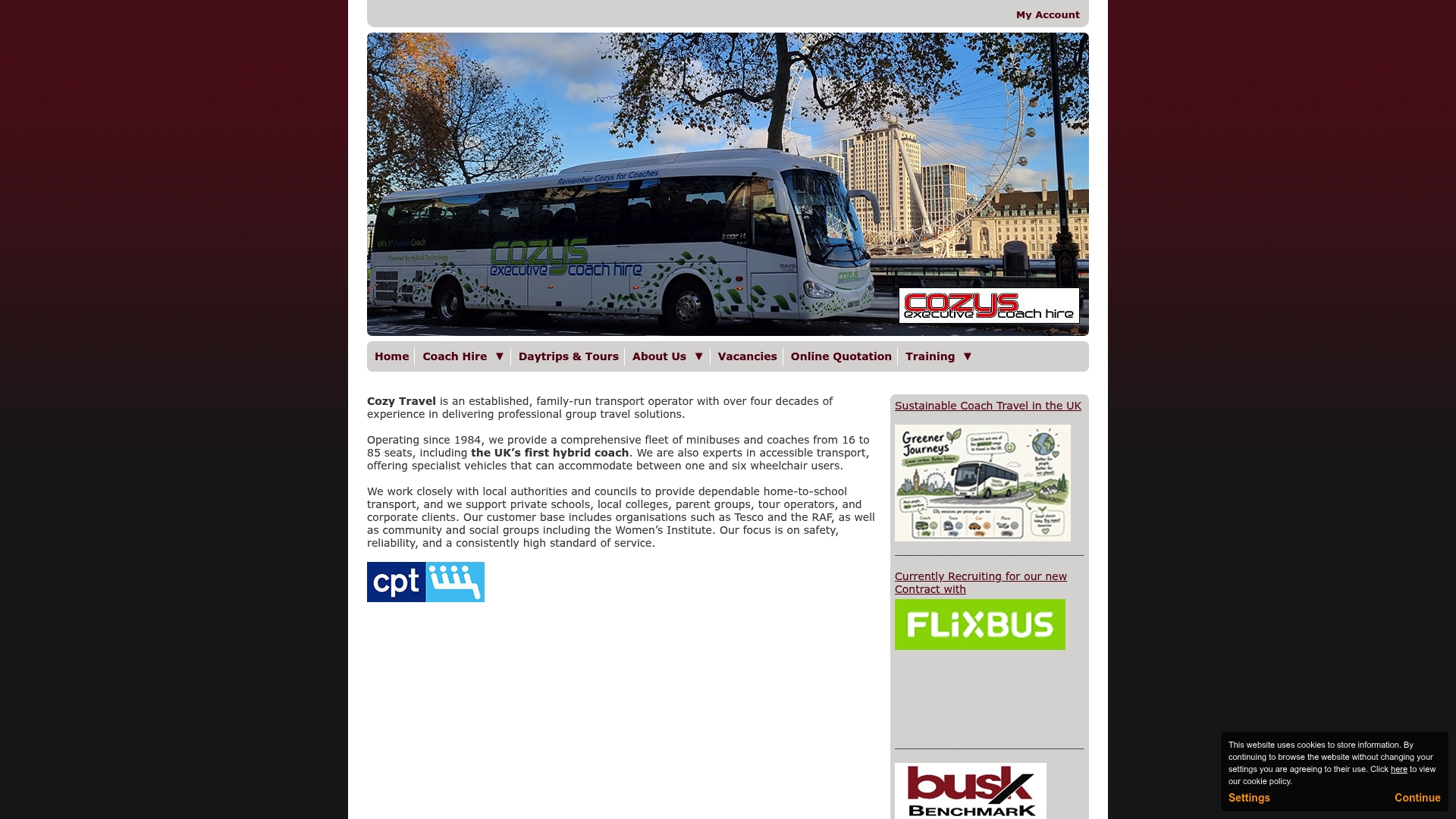
York is not a forgiving city for coaches that arrive unprepared, and operators with experience in such environments understand the challenges involved. Some operators have fleets ranging from 16 to 85 seats, including hybrid coaches, and drivers train through DVSA-approved Driver CPC courses that cover this sort of restricted-access routing.
What that experience actually changes on the ground is planning discipline: knowing which rendezvous point suits a group's onward walk, which vehicle size clears a height-restricted approach, and how to build contingency into an itinerary before a flood alert or a busy race weekend forces a rethink. Cozy doesn't promise to eliminate York's restrictions; no operator can. What decades of group travel into cities like this one does provide is the habit of checking the details before the wheels turn, so a coach parking plan holds up on the day rather than falling apart at the first closed gate.
— Cozys
Planning a group visit to York? Here's how Cozy can help
Getting a coach into York without a hiccup comes down to matching the right vehicle and driver experience to the city's restrictions, and that's precisely where a specialist operator earns its keep over a generic hire arrangement.
Cozy offers several services directly relevant to a York visit:
- Coach hire across a fleet of 16 to 85 seats, so vehicle size matches your group and any height or access constraints
- Wheelchair-accessible coaches for groups needing step-free boarding
- A hybrid coach option for organisers prioritising a lower-emission trip
- Drivers trained through DVSA-approved Driver CPC programmes, including route planning for restricted city access
If you're organising a school trip, corporate outing, or community group visit to York, get a quote for coach hire and ask about route planning support for rendezvous points and drop-off timing. Accessibility requirements, race day logistics, or Christmas market bookings are all worth raising at enquiry stage, well before travel dates lock in.
Sources
- Information for coach operators – City of York Council
- Coach and Parking Information | Visit York
- St George's Field coach park - Parking directory – City of York Council
FAQ
Where can I park my coach for York Racecourse races?
Coaches attending race meetings must use York Racecourse's own dedicated coach park, accessed via Bishopthorpe Road. This site is managed separately from the council's St George's Field and Union Terrace, so contact the racecourse directly to confirm arrangements.
Where do coaches drop off in York?
Coaches may only set passengers down at designated rendezvous points: Leeman Road for the railway station, Fawcett Street for the castle area, and Foss Bank for the Minster. Stopping inside the city walls is prohibited except for limited authorised access.
Is there free parking in York, UK?
Both St George's Field and Union Terrace coach parks are free to use between 18:00 and 08:00. Daytime parking (08:00 to 18:00) is charged, with tariffs starting at £8.80 for up to one hour.
What does coach parking mean?
Coach parking refers to designated bays or sites, separate from car parking, sized and regulated for full-size coaches and minibuses. In York, this specifically means council-managed sites like St George's Field and Union Terrace, plus the racecourse's own facility on event days.
What happens if a coach idles its engine in a York coach park?
Leaving an engine running while parked risks a Penalty Charge Notice under the council's anti-idling enforcement. Drivers should switch off immediately after parking, even for short stops.