
For most UK travellers on a budget or moving in groups, coach travel wins on price and simplicity. For anyone racing against the clock on a major intercity line, the train wins on speed and reliability. The real decision hinges on which of those two things matters more for the journey you’re actually taking, not which mode sounds nicer on paper.
TL;DR:
Coach fares remain cheaper than train tickets for last-minute or flexible bookings, while advance train tickets can sometimes match or beat coach prices with careful planning.
Trains offer more consistent journey times and higher speeds on dedicated infrastructure, especially on electrified, high-speed corridors, compared to coaches affected by road traffic.
Coaches typically provide greater luggage capacity and more accessible options, making them preferable for bulky equipment or mobility needs, especially for groups.
Group travel often benefits financially and logistically from coach hire, which simplifies coordination and often reduces per-head costs for parties of four or more.
Emissions are generally lower for well-loaded coaches and electrified rail routes, with hybrid coaches providing a lower-emission alternative on longer group journeys without rail.
Table of Contents
Coach vs train: how the costs really compare
Coach fares work on a flat, predictable model, making them a practical choice for many budget trips and multi-stop tours. A ticket booked the night before often costs roughly the same as one booked a month out, which makes coaches genuinely useful for last-minute plans. Train pricing works the opposite way: fares are dynamic, rising sharply as the departure date approaches and varying hugely between peak and off-peak windows.
That difference shows up clearly on price comparisons. TrainFYI’s analysis of European corridors found buses often significantly undercutting trains on comparable routes, and UK coach pricing follows a similar pattern on many domestic journeys. CoachScanner’s UK comparison reinforces this, noting coaches are typically the more budget-friendly option once you factor in the full booking window rather than just a single fare snapshot.
Trains can still beat coaches on price, but only with planning. Advance train tickets bought weeks ahead sometimes match or beat coach fares on the same corridor, though TrainFYI notes this requires real booking discipline and sacrifices flexibility if your plans shift.
A few practical levers change the maths:
-
Railcards (16-25, Senior, Family & Friends) can cut a third off many fares but only apply to certain ticket types.
-
Advance singles are usually far cheaper than Anytime or Off-Peak fares bought on the day.
-
Group tickets and coach group discounts often make coach travel dramatically cheaper per head for parties of four or more.
-
Luggage allowances on coaches are typically generous and free; some train operators and connecting services impose fees or restrictions on oversized bags.
Add up the fare, the railcard eligibility, and any luggage fees before assuming either mode is automatically cheaper.
How fast and reliable is each option?
Trains hold a structural advantage on speed. High-speed and electrified intercity lines run on dedicated infrastructure, largely immune to road congestion, which keeps journey times consistent day to day. HolidayExperiences’ route comparisons show this gap plainly on corridors like London to Edinburgh, where the train cuts hours off the equivalent coach journey.
Coaches, by contrast, share the road with everyone else. A journey timetabled at four hours can stretch well beyond that if the M6 or M25 seizes up. TrainFYI’s research confirms this pattern more broadly: buses are consistently vulnerable to road traffic in a way rail simply isn’t, even as they undercut train fares on price.
That said, coaches aren’t always slower in practice:
-
On routes where rail requires several changes, a direct coach can beat a multi-leg train journey on total door-to-door time.
-
Motorway coach services running outside peak congestion hours often hold to schedule reliably.
-
Overnight coach services turn dead travel time into sleep time, effectively removing the speed penalty altogether.
If you have a tight connection, an event start time, or work commitments at the other end, favour the train on any route with a dedicated mainline. The predictability matters more than the average journey time.
What’s it actually like on board?
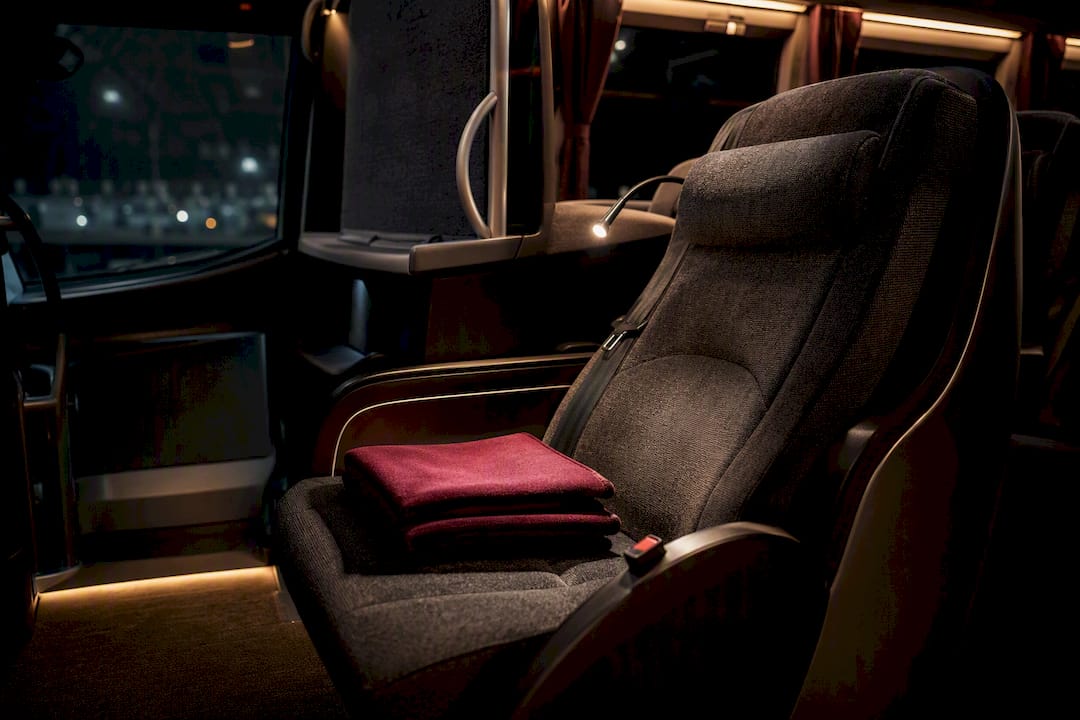
Comfort has narrowed between the two modes over the past decade, but it hasn’t equalised. Coach seat pitch is fixed and tighter than most train carriages, so a five-hour coach journey feels longer in the legs than the equivalent train trip, even at the same clock time.
Typical coach amenities now include:
-
On-board Wi-Fi and USB or mains power sockets on most modern fleets
-
Toilets on virtually all long-distance services
-
Reclining seats, though movement around the vehicle is limited once moving
Trains still offer freedoms coaches can’t match. You can walk the length of the train, stretch your legs at a table seat, and on many long-distance services, visit a buffet car for food and drink. Vents Magazine’s rundown of coach advantages points out that modern coach amenities have closed much of the gap on medium-length routes, particularly Wi-Fi reliability, though the ability to move around remains rail’s clearest edge.
Overnight journeys flip some of these trade-offs. A coach seat reclines further than most standard train seats, and without a sleeper berth booked, many travellers rest better on an overnight coach than sat upright on a late train.
Pro Tip: If you’re booking a long coach journey, pick a seat near the front rather than over the rear axle. It’s noticeably smoother and quieter, especially on motorway sections with poor road surfacing.
Which mode is more convenient door to door?
Convenience often comes down to where you actually get dropped off, not how fast the vehicle moves. Coach stations tend to sit right in city centres, London’s Victoria Coach Station being the obvious example, while some rail termini require a further tube or taxi leg depending on your final destination.
Frequency varies enormously by mode and route. Some coach corridors, particularly London to Oxford or London to Cambridge, run services every 15 to 20 minutes at peak times, rivalling suburban rail frequency. Longer intercity coach routes typically run hourly or less, against trains that often depart every 20 to 30 minutes on major lines.
A few things worth checking before you commit:
-
Whether your coach or train arrives near your actual destination, or adds a last-mile leg by tube, bus, or taxi.
-
Peak-time frequency versus off-peak, since some routes drop to a handful of daily coach departures outside busy periods.
-
Whether last services run late enough for your return plans, particularly on rural or cross-country coach routes.
For anyone finishing a journey in central London, the TfL journey planner is the most reliable way to check that last-mile leg and its likely cost, since it factors in real-time Tube, bus, and Overground connections rather than a generic estimate.
Groups, luggage and accessibility: when to hire a coach
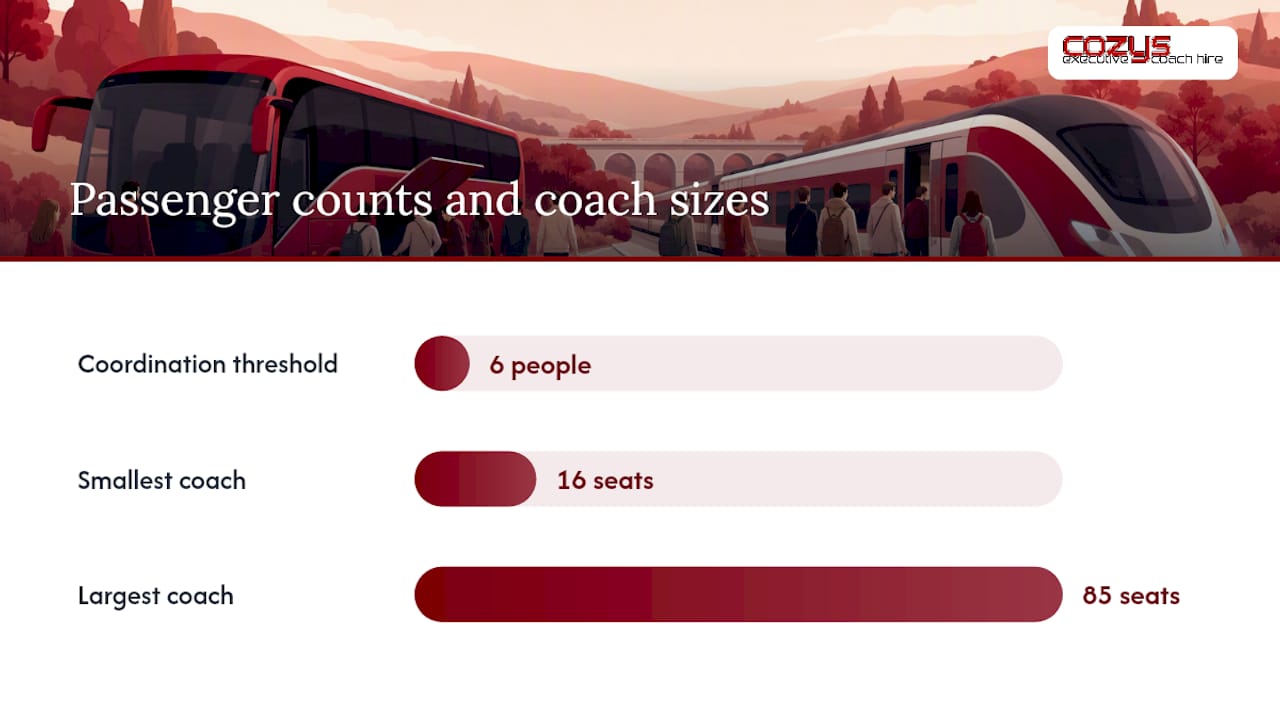
Once a group reaches a certain size, the cost and logistics calculation flips entirely in favour of coach hire. Coordinating six or more separate train tickets, especially with railcard eligibility varying between travellers, quickly becomes more expensive and more complicated than booking a single private vehicle.
Three things to work out before deciding:
-
Calculate true per-head cost. Add up every individual train fare across the group, including any peak surcharges, and compare it against a private coach hire quote for the same journey. CoachScanner’s analysis notes that private hire frequently wins once passenger numbers climb, because it reduces the complexity of coordinating multiple tickets alongside cutting cost.
-
Check luggage capacity. Coaches handle bulky luggage, sports equipment, and instruments far more easily than trains, where oversized items can be genuinely awkward on a crowded service.
-
Confirm accessibility provision. Wheelchair users and passengers with mobility needs should check vehicle specifications directly, since not every coach or train service offers the same level of step-free access or dedicated space.
A fleet with a genuine range of vehicle sizes matters here too. Cozy’s coach fleet spans 16 to 85 seats, which means a school trip, a corporate away day, and a community group outing can each get a vehicle sized to the actual party rather than an oversized coach running half empty.
How coach and train compare on emissions
Emissions don’t split neatly along modal lines. Rail’s advantage grows on electrified routes, where the per-passenger carbon footprint drops well below diesel-powered alternatives. TrainFYI’s analysis makes clear that occupancy and route length materially change the outcome, not just the mode itself.
Occupancy is the detail most comparisons skip:
-
A coach travelling near-full is typically the lower-emission option per passenger, sometimes markedly so.
-
An empty or lightly loaded coach can produce a worse per-passenger footprint than a busy train, since the vehicle’s fuel burn barely changes with passenger numbers.
-
Electrified rail routes offer the cleanest option where the line supports it, though not every UK corridor is electrified.
Hybrid coaches narrow this gap further on routes without electrified rail. Cozy operates the UK’s first hybrid coach, built specifically to cut fuel use on longer group journeys where rail isn’t a practical option.
Which should you choose for your specific journey?
Route type matters more than any general rule about coach versus train.
-
Short hops and daily commuting: trains generally win, thanks to frequency and speed over shorter distances where road traffic has less time to bite.
-
Long intercity daytime travel: prioritise trains on electrified, high-speed corridors like London to Manchester or London to Edinburgh, where the time saving is substantial.
-
Budget trips, overnight travel, or multi-stop touring: coach usually comes out ahead, particularly when flexibility on dates matters more than shaving hours off the journey.
-
Group itineraries with bulky luggage: coach hire consistently simplifies logistics and cost once you’re moving more than a handful of people together.
None of this replaces checking your specific route. A journey that looks like a clear train win on a map can flip once you factor in a change of trains, a peak-fare surcharge, or a coach service that happens to run direct.
Decision checklist: 6 questions to pick coach or train
Run through these before booking anything:
-
How time-sensitive is the journey? If you have a fixed arrival deadline, weight this heavily toward rail on electrified corridors.
-
What’s the total cost difference, not just the headline fare? Factor in railcards, luggage fees, and group discounts.
-
How much flexibility do you need? Coach fares typically stay stable if plans shift; advance train fares usually don’t.
-
How many people are travelling? Above four or five, run the coach hire numbers before assuming multiple train tickets are cheaper.
-
How much luggage or equipment are you carrying? Bulky items favour coach travel almost every time.
-
Does emissions impact matter to your decision? Favour electrified rail or a well-loaded coach over a near-empty one.
Pro Tip: Search advance rail fares first, since they set your price ceiling. Then check whether a direct coach route exists on the same corridor. If it does and the fare’s lower, coach usually wins unless your schedule is tight.
What Cozy sees in group travel demand
Over four decades of group transport work has shown a consistent pattern: organisers want a fleet that flexes to the group, not the other way round. Cozy’s range, from 16-seat minibuses to 85-seat coaches, plus a maximum 6-star BUSK safety rating, reflects requests that span school runs, corporate transfers, and accessible transport for wheelchair users, often within the same week.
— Cozys
How Cozy helps groups travel without the ticket-juggling
Cozy is the practical alternative to coordinating a dozen separate train bookings for a group trip. Where coach or rail comparisons above focused on individual journeys, group organisers face a different problem entirely: matching vehicle size, accessibility, and cost to a specific party, not a single seat.

Cozy’s coach hire service covers private bookings across a fleet ranging from 16 to 85 seats, including the UK’s first hybrid coach for groups wanting a lower-emission option. Accessible transport is built into the fleet for wheelchair users, and dedicated services support schools and colleges alongside corporate travel for local businesses. If you’re organising a group trip and the per-head maths on multiple train tickets isn’t adding up, request a quote through Group Travel and compare it against your rail estimate before you book anything.
Sources
Check real-time fares and last-mile routes on the TfL journey planner before booking either mode. For payment options in London, TfL’s Visitor Oyster card guidance covers pay-as-you-go fares.
-
10 Reasons Coach Travel Beats Driving or Trains for UK Trips — Vents Magazine
-
Train vs Bus in Europe: Cost, Comfort & Speed Compared — TrainFYI
-
Coach vs Train Travel: A Detailed Comparison for UK Commuters — CoachScanner
FAQ
Which is cheaper, a train or a coach?
Coach fares are usually cheaper than train fares in the UK, particularly for late bookings, since coach pricing stays flat rather than rising as the departure date nears. Trains can match or beat coach prices only with advance tickets booked well ahead, which sacrifices flexibility.
What is the difference between a train and a coach?
A train runs on dedicated rail infrastructure, giving it consistent speed and predictability largely unaffected by road traffic. A coach shares the road network with other vehicles, which makes it more vulnerable to delays but typically cheaper and more flexible for last-minute bookings.
Is a bus cheaper than a train in London?
Within London itself, bus fares are generally cheaper than Tube or rail fares for short trips, and the TfL journey planner shows the exact fare difference for any specific route. For longer coach journeys leaving London, coach fares are often substantially lower than the equivalent train fare, especially booked close to travel.
Is it better to travel by train or bus?
It depends on what matters most for your journey: trains generally win on speed and reliability for time-sensitive trips on major corridors, while coaches usually win on price and flexibility, particularly for groups or budget travel. For group bookings specifically, private coach hire often works out both cheaper and simpler than coordinating multiple individual train tickets.