

A SEND risk assessment is a written, child-specific plan that records hazards, the reasonable adjustments needed, and who is responsible for each one. Schools or the SENCo usually draft it, but the SEND Code of Practice expects parents and the child to help shape it. If nobody has offered you one, ask the SENCo in writing for a co-produced copy promptly.
TL;DR:
A SEND risk assessment must include specific hazards, child’s medical and sensory needs, control measures, responsibilities, and a fixed review date.
Co-producing the assessment requires gathering evidence, requesting a meeting with a clear agenda, and confirming detailed actions before finalizing.
Securely sending and storing the document involves requesting signed copies, using school email with read receipts, and keeping copies in a shared, accessible folder.
Disagreements over the assessment can be escalated step-by-step from the SENCo to the local authority, with evidence to support claims of discrimination.
Review dates should be scheduled proactively, especially after incidents or changes, with higher-risk cases needing termly updates or immediate re-evaluation.
Table of Contents
-
What are your legal rights if you disagree with the assessment?
-
Co-production works better as a conversation than a checklist
What should a SEND risk assessment cover?
An assessment that ticks a compliance box but ignores your child’s actual day is not worth much. Official DfE guidance on SEND risk assessments sets out what settings should consider, and it goes well beyond a generic classroom checklist.
Use this as your baseline when checking a school’s draft or building one from scratch:
-
Hazards and situations: classroom transitions, corridor moves, playtime, school trips, personal care routines, therapy or intervention sessions, and unstructured time such as lunch.
-
Child-specific factors: medical needs (epilepsy, allergies, diabetes), sensory triggers (noise, light, crowding), and communication needs (non-verbal cues, augmentative communication devices, processing time).
-
Control measures and reasonable adjustments: additional staffing at specific points in the day, adapted equipment, seating arrangements, movement breaks, or changes to timing for particular activities.
-
Named responsibilities: who monitors each control measure day to day, and who is accountable if something is not working.
-
Review dates: a fixed date for reassessment, not an open-ended “as needed” line.
-
Recordkeeping and consent: who holds the document, how it is stored, and what parental permissions exist for sharing information with therapists, transport staff, or supply teachers.
A rapid evidence review on identifying and supporting SEND pupils found that early identification, multi-agency input, and teacher expertise all matter more than any single document format. That means a good assessment should reflect input from therapists, teaching assistants, and family, not just the SENCo’s own observations. If a plan reads as though one person wrote it in isolation, ask who else contributed before you sign it off.
How do you co-produce the assessment with school?
Co-production means the school and family agree the content together, not that parents simply approve a finished draft. The East Sussex SEND co-production handbook.pdf) frames this as equal partnership, backed by planning forms and a genuine feedback loop.
-
Gather your evidence first. Bring medical letters, therapist reports, and examples of adjustments that have worked previously at home or in other settings.
-
Request the meeting in writing. Ask the SENCo for a specific date and propose a short agenda so both sides prepare properly.
-
Structure the conversation. Start with introductions and current concerns, move to proposed adjustments, then agree concrete actions with named owners and dates.
-
Agree the exact wording before you leave. Vague phrases like “support as needed” solve nothing; push for specifics such as “TA present during PE transitions.”
-
Confirm accessibility of future meetings. If evening meetings, video calls, or written summaries work better for you, say so now.
-
Record outcomes and circulate them. Someone should email a written summary within a few days, with actions and deadlines listed.
Pro Tip: Sending the draft agenda and any relevant paperwork at least a week ahead of the meeting gives everyone time to prepare, and research on co-production practice shows this small change alone increases meaningful parental input.
How do you send and store a SEND risk assessment securely?
Getting the content right matters little if the final document gets lost between drafting and delivery. Once you have agreed the wording, focus on how you send risk assessment paperwork so there is a clear, traceable record on both sides.
-
Request a signed copy, either as a PDF with a digital signature or a scanned paper version, so you have proof the school approved the final text.
-
Use school email with a read receipt for routine updates, keeping the SENCo and class teacher copied in.
-
Hand-deliver or use recorded post for anything formal, such as an assessment tied to a tribunal case or a serious medical protocol.
-
Keep your own copy at home, ideally in the same folder as medical letters and previous versions, so you can track changes over time.
-
Check the school holds it in the pupil file, not just in an individual teacher’s inbox, so it survives staff changes.
-
Clarify consent before sharing further, particularly if the document needs to reach a transport provider, therapist, or supply staff, since personal medical detail should only travel as far as necessary.
None of this needs specialist software. A dated PDF, a shared folder, and a simple acknowledgement email cover most schools’ needs for an electronic risk assessment record.
What are your legal rights if you disagree with the assessment?
Schools have a legal duty to make reasonable adjustments under the Equality Act 2010, and a risk assessment that ignores a known disability-related need can fall short of that duty. If you believe the school’s approach amounts to disability discrimination, guidance on claiming for disability discrimination in SEND cases sets out the tribunal route and the evidence you will need.
Work through the escalation steps in order rather than jumping straight to a tribunal claim:
-
Raise it with the SENCo first, in writing, asking for specific changes and a response date.
-
Escalate to the headteacher if the SENCo cannot resolve it or the issue is about resourcing.
-
Write to the governing board if the headteacher’s response does not address your concerns.
-
Contact the local authority where the school’s own complaints process has been exhausted.
-
Consider mediation before a formal tribunal claim; many disputes resolve here without a hearing.
-
Note the statutory time limits for a First-tier Tribunal (SEND) claim, since these run from the date of the discriminatory act, not from when you finished complaining internally.
Keep copies of every email, meeting note, and version of the risk assessment as you go. Tribunal panels look for a clear paper trail showing what was agreed, when, and by whom, and a folder of dated correspondence is worth far more than a strong argument with no evidence behind it.
When should you review a SEND risk assessment?
Set review dates before you need them, not after something has gone wrong. A sensible default is a termly review for higher-risk needs, with an immediate review after any incident or significant change in the child’s condition.
-
Trigger points: after an incident, a diagnosis change, a house move affecting the school run, or a change of key staff.
-
Who should attend: parents, the SENCo, and any relevant therapist or teaching assistant directly named in the plan.
-
Quick review checklist: are the control measures still happening in practice, has anything changed medically, and are the named responsibilities still accurate?
What transport risks should schools and providers record?
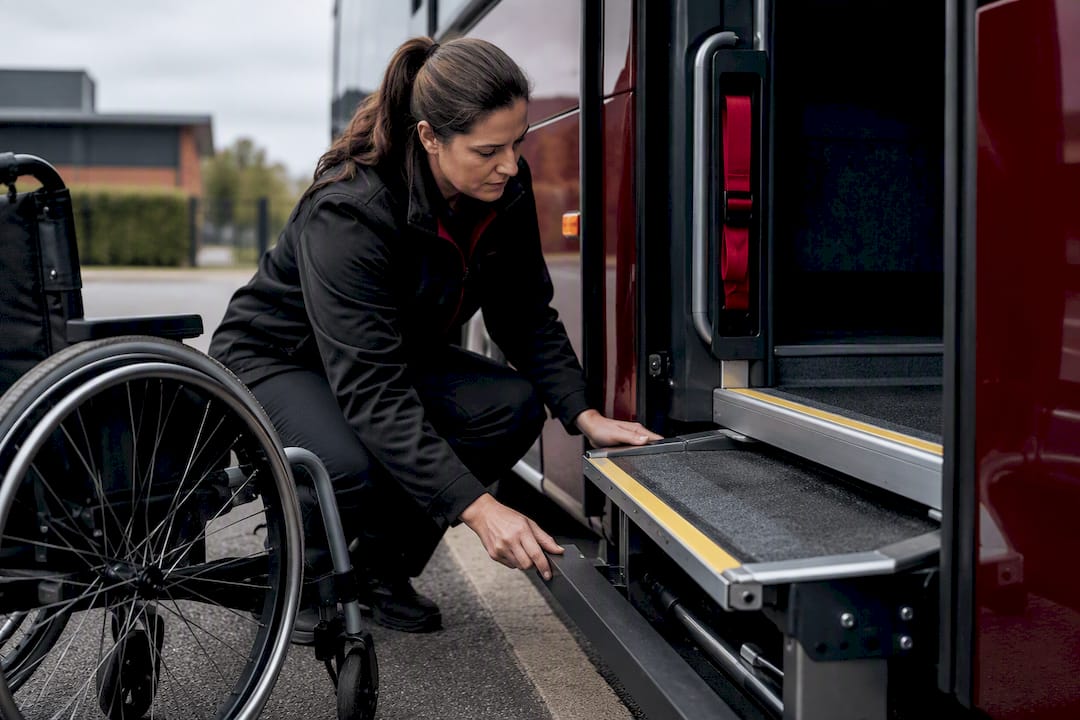
Classroom-focused assessments often skip transport, yet boarding procedures, wheelchair securing, and escort arrangements need the same clarity as anything happening inside the building. Cozy Travel’s work with schools and local authorities on home-to-school transport shows that simple agreed points, such as which entrance a vehicle uses, seating plans, and advance staff briefings, prevent confusion on the day.
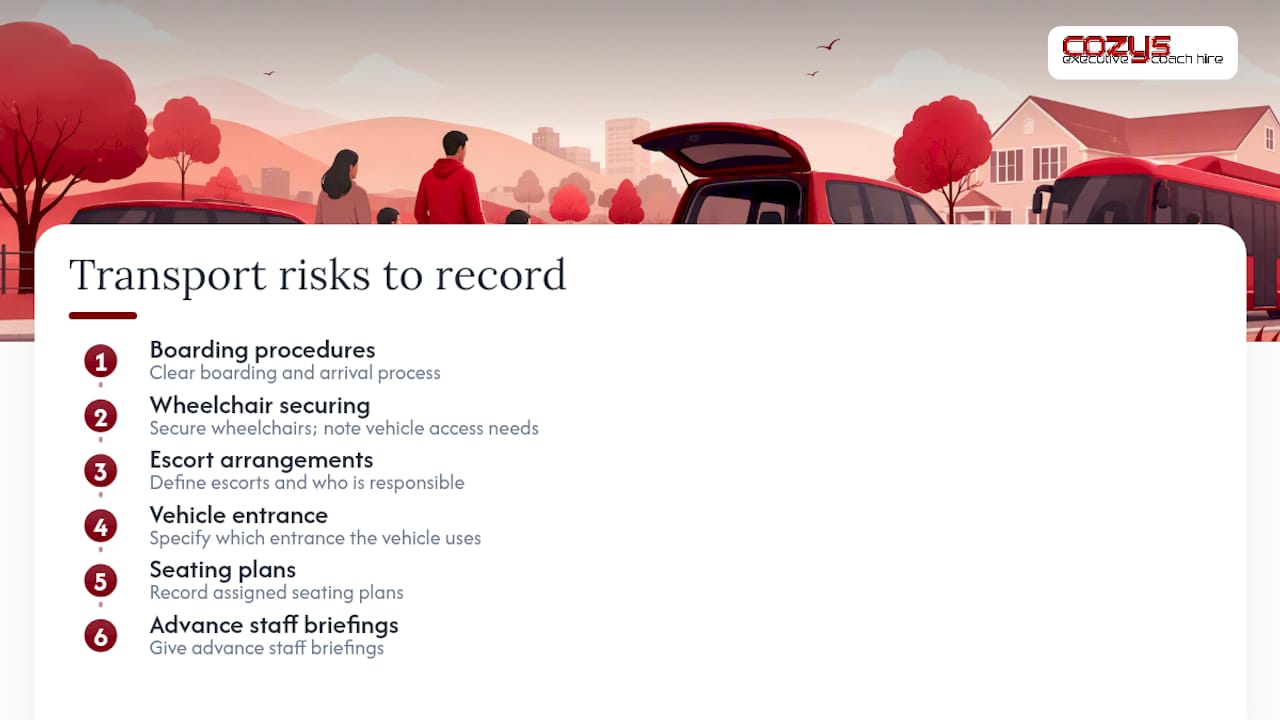
The assessment should state clearly whether the school or the transport provider is responsible for each task, particularly emergency contact details and equipment checks, so nothing falls between the two. For accessible journeys specifically, a wheelchair-accessible coach service can flag vehicle-specific access needs that a generic school template rarely covers. A PGL and school residential trip kit list is also worth checking against for any multi-day trip planning.
Co-production works better as a conversation than a checklist
The schools that get this right treat the meeting as a genuine exchange, not a form to complete. Collaborative language and a clear agenda do more to resolve disagreements than any amount of policy citation. When talks stall, escalate calmly through the proper steps rather than skipping straight to a tribunal claim, and bring in SENDIASS or independent advice if you feel out of your depth. Most disputes resolve long before that stage.
— Cozys
Which official transport option fits your school’s needs?
Schools arranging daily or occasional transport for pupils with SEND needs a provider who understands accessible boarding, secure wheelchair spaces, and clear communication with escorts. Cozy Travel holds a 6-star BUSK safety rating and runs a fleet ranging from 16 to 85 seats, including accessible vehicles suited to wheelchair users on both Home-to-school transport routes and one-off trips. Schools and local authorities can explore Schools & Colleges transport contracts or the dedicated Accessible Specialists service to match a vehicle to the specific access needs recorded in a pupil’s risk assessment.
This article is general information, not a substitute for advice from a qualified lawyer. Consult a qualified legal professional about your own circumstances before acting on anything here.
Sources
FAQ
What are the legal requirements for SEND risk assessments in the UK?
There is no single named form, but schools must make reasonable adjustments for disabled pupils under the Equality Act 2010, and the SEND Code of Practice sets the expectation that families are involved in identifying and planning support. A written, child-specific risk assessment is the practical way most schools meet that duty.
How do you submit a risk assessment request to a school?
Write to the SENCo or class teacher asking for a co-produced risk assessment, and propose a meeting date rather than simply requesting a finished document. This starts the co-production process the SEND Code of Practice expects, and it gives you a written record that you asked.
What should a SEND risk assessment include?
At minimum, it should list the specific hazards or situations, the child’s individual medical or sensory needs, the agreed control measures, named responsibilities, and a fixed review date. DfE guidance on SEND risk assessments sets out this kind of detail rather than a generic template.
How often should a SEND risk assessment be reviewed?
A termly review works well for higher-risk needs, with an immediate review whenever there is an incident, a diagnosis change, or a change of key staff. There is no fixed statutory interval, so agree the review date directly with the school rather than leaving it open-ended.
Can you appeal if the school refuses reasonable adjustments?
Yes. Start with the school’s own complaints process, from the SENCo through to the governing board, then contact the local authority if that fails to resolve things. If you believe discrimination has occurred, guidance on claiming for disability discrimination explains the First-tier Tribunal (SEND) route and its time limits.