
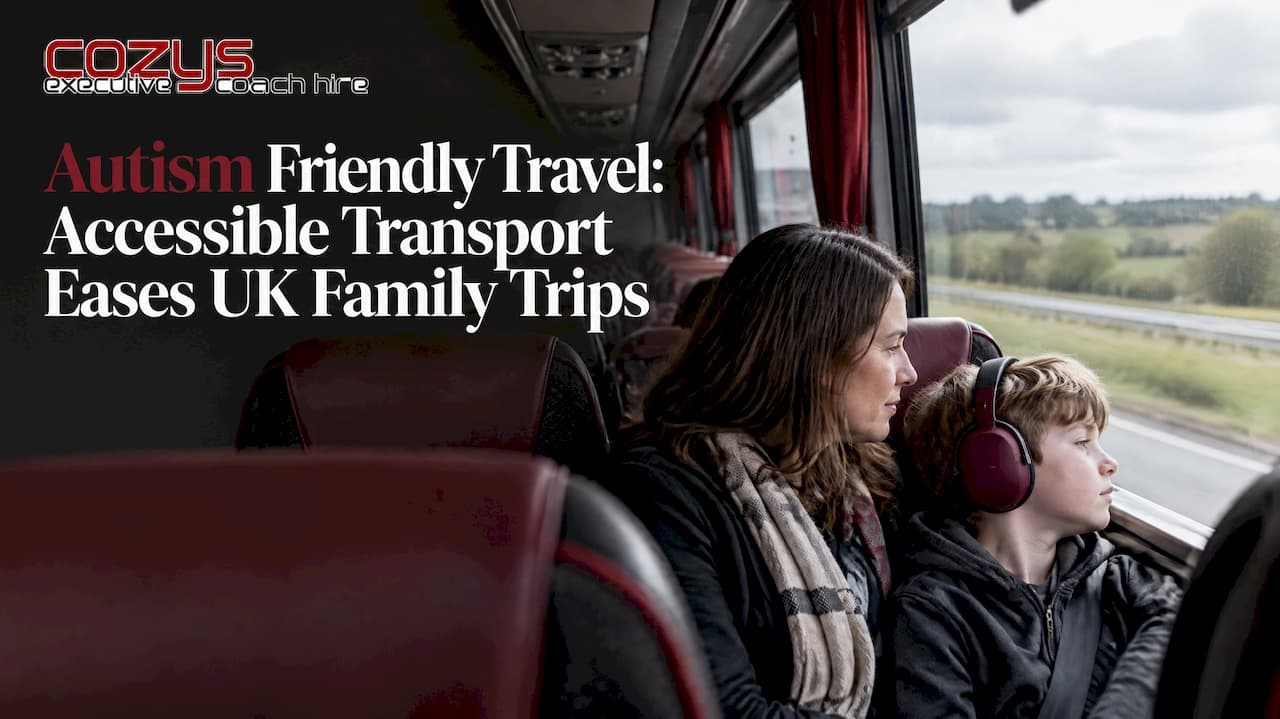
Yes, with the right preparation and use of available assistance, families can make trips significantly less stressful for autistic travellers. UK service providers carry a legal duty under the Equality Act 2010 to make reasonable adjustments, and tools recommended by the National Autistic Society, from social stories to pre-booked assistance, turn an unpredictable journey into a manageable one. The checklist below shows exactly where to start.
TL;DR:
- Most UK airports and airlines recommend requesting assistance at least 48 hours before departure, since late bookings may leave specific support unconfirmed.
- Ask properties to confirm a genuinely quiet room, flexible meal times, and room change terms directly; autism certification signals staff training, not a guaranteed fit.
- Use photos of the actual airport or hotel in a visual schedule, then rehearse the hardest transition before travel to make queues or boarding familiar.
- Keep headphones, snacks, a comfort object, and spare clothes in hand luggage; identify quiet spaces on arrival and schedule a recovery pause after security.
- For accessible group transport, confirm wheelchair securement and PSVAR compliance, request a seating plan, and ask how much advance booking the vehicle requires.
Table of Contents
- Top tips and a planning checklist before you book
- Choosing destinations and checking what accommodation actually offers
- Getting through airports and public transport with less friction
- Sensory kit, seating and recovery tactics for the day itself
- Building social stories, Explorer Passports and practice runs
- How specialist accessible transport simplifies the logistics
- Why I think families deserve better than generic advice
- How we can help you plan a calmer journey
- FAQ
- Sources
Top tips and a planning checklist before you book
Good autism friendly travel starts weeks before anyone packs a bag. The earlier a family begins, the more choice and flexibility they have over seating, accommodation and assistance bookings.
- Book early and notify providers in good time. Airlines, airports and rail operators generally ask for at least 48 hours' notice to arrange assistance, and some hotels need longer to confirm a specific room.
- Build a social story or visual schedule. Walk through the trip in sequence, from leaving the house to arriving at the destination, using words and images your traveller already recognises.
- Rehearse the steps that matter most. Practising a security queue, a boarding gate or a hotel check-in desk at home, even as a simple role-play, reduces the shock of the real thing.
- Keep the itinerary light. Plan fewer activities per day than you think you need, and build in deliberate downtime rather than treating rest as a gap to fill.
- Ask direct questions before booking accommodation. Confirm whether a quiet room is genuinely available, whether breakfast times are flexible and whether staff have had any autism awareness training.
- Pack a labelled sensory kit. Keep it accessible, not buried in hold luggage, and label anything that matters so it is never lost in transit.
Pro Tip: Rehearse the single hardest transition, often security screening or boarding, more than once; familiarity with that one step tends to reduce anxiety across the whole journey.
None of this needs to be elaborate. A single printed page with photos of the actual airport or hotel, paired with one practice outing to a quieter version of a similar environment, does most of the work. The goal is predictability, not perfection, and a shorter but calmer trip usually beats a longer one crammed with sights.
Choosing destinations and checking what accommodation actually offers
Some types of break are naturally easier to manage than others. Self-catering cottages, short-drive escapes and small coastal towns tend to reduce sensory load because they come with fewer queues, fewer strangers and more control over mealtimes and noise, as detailed in this remote ski travel planning from the UK. A villa with its own kitchen and garden will almost always beat a packed resort for a family that needs to control the pace of the day.
When you are weighing up a listing, look past the marketing photos and check specifics:
- Does the property have a genuinely quiet room, away from lifts, bars or play areas, or is "quiet" just a description on a website?
- Can meal times flex outside the set dinner slot if your traveller needs to eat earlier or later than other guests?
- Has staff had any formal autism awareness training, and can the property describe what that training covered?
- Is there a private outdoor space or a short walk to open ground for decompression after a busy excursion?
- What is the cancellation or room-change policy if the room does not suit once you arrive?
Certification schemes can help narrow the search. The International Board of Credentialing and Continuing Education Standards runs Certified Autism Center and Advanced Certification in Autism Conduct programmes, which indicate that a venue has trained a large share of its staff in autism awareness and undergoes periodic review. That is a useful signal of investment, not a guarantee of fit: certification scope varies between properties, so it is still worth confirming the specific adjustments you need directly with the venue before you book.
| What to check | Why it matters | How to confirm it |
|---|---|---|
| Quiet room availability | Reduces noise and traffic near sleeping space | Ask for the exact room number or floor, in writing |
| Staff autism awareness training | Affects how staff respond to meltdowns or requests | Ask what the training covered and how recently |
| Flexible meal times | Avoids forcing a rigid routine onto the trip | Confirm kitchen hours outside the set sitting |
| IBCCES CAC/ACAC certification | Signals audited staff training standards | Check the certification date and scope on the IBCCES site |
A short email asking these questions directly, rather than relying on the listing copy, usually gets a far more honest answer than the brochure ever will.
Getting through airports and public transport with less friction
Airports put that duty into practice through specific, named programmes:
- Passenger Assist lets you request help at check-in, through security and to the gate, and most UK airports and airlines recommend booking it at least 48 hours ahead of travel, as Gatwick's assisted travel guidance sets out.
- The Sunflower lanyard signals a hidden disability to staff without needing to explain it out loud at every checkpoint.
- Sensory packs and Flight Ready familiarisation tours, offered at airports including Heathrow, let travellers walk through security and even sit in a mock cabin before the actual flight, which is particularly useful for children aged five and over.
One practical figure worth planning around: airports and airlines generally recommend notifying them at least 48 hours before travel to arrange assistance, and leaving it later can mean the specific support you need is not confirmed in time.
Rail and coach journeys have their own version of this support. Most UK train operators offer a Passenger Assist booking service that provides extra time and help on the platform, and choosing a quieter carriage where one is available can make a noticeable difference on a long journey. If your trip involves changing between modes of transport, plan the transfer itself as its own step: a tight connection between a train and a coach removes exactly the buffer time that makes transitions manageable.
Sensory kit, seating and recovery tactics for the day itself
However much preparation goes in beforehand, travel days still throw up moments that need an immediate, practical response rather than a long explanation.
- Pack a sensory kit that stays with you, not in the hold. Ear defenders or noise-cancelling headphones, a favourite snack, a tactile fidget item, a small comfort object and a spare set of clothes cover most situations.
- Ask for priority or assisted boarding. On flights this usually means boarding before the main queue; on coaches and trains it can mean being seated before other passengers arrive.
- Choose seats deliberately. An aisle seat near a toilet, or a seat away from the engine or galley noise, can remove one more unpredictable variable.
- Know where the quiet spaces are before you need them. Many airports and some large stations have a dedicated quiet room, and it is worth asking staff where it is as soon as you arrive rather than searching for it mid-crisis.
- Brief staff in one or two short sentences. "My son is autistic and finds queueing difficult, could we use the priority lane" is more useful to a member of staff than a longer explanation.
Pro Tip: Agree a simple non-verbal signal with your traveller before you leave home, a tap on the arm or a specific hand gesture, so they can tell you they need a break without having to find the words in a noisy environment.
Recovery matters as much as prevention. A planned ten-minute pause in a quiet corner after security, before boarding, often prevents a bigger escalation later in the journey.

Building social stories, Explorer Passports and practice runs
A social story works best when it uses photographs of the actual places your family will visit, not generic stock images. A simple structure covers: leaving the house, the journey to the airport or station, checking in, going through security, boarding, and arriving. Keep each step to one sentence and one photo where possible.
- Use real photographs of the specific airport, coach or hotel you have booked, taken from their own websites where available.
- Download an Explorer Passport or similar pre-visit material, which several UK airports offer free of charge, and work through it together at home.
- Ask ahead whether the airport or attraction offers a pre-visit or familiarisation session, since many now run these on specific dates and need advance booking.
- Adapt the level of detail to age and ability: younger children often respond better to simple picture sequences, while older children and adults may prefer a written step-by-step itinerary with times attached.
Practising the steps in a low-pressure setting, even walking through a mock security check at home with a tray and a belt, builds a template the brain can recognise later, which is a large part of why rehearsal works.
How specialist accessible transport simplifies the logistics
For a family or group travelling together, door-to-door transport removes several of the hardest transitions in one go: no navigating a car park, no searching for a second taxi, no splitting the group across different vehicles at the last minute. For school trips, group holidays or airport transfers, a single accessible coach or minibus can keep everyone together from doorstep to departure gate.

We have spent over four decades providing group transport, and that experience shapes how we think about journeys that need to be predictable rather than merely fast. Our fleet includes vehicles ranging from 16 to 85 seats, and we provide accessible services for wheelchair users, and our background in home-to-school contracts for local authorities and private schools means we are used to planning around routines, timings and specific passenger needs rather than treating every booking as identical.
If you are weighing up accessible transport for a trip, a short checklist helps:
- Ask how wheelchairs are secured in transit and whether the vehicle meets PSVAR requirements for wheelchair-accessible services.
- Request a seating layout diagram so you know exactly where each passenger will sit before the day arrives.
- Check the driver's experience with passengers who need extra time or a calmer boarding process.
- Confirm booking lead times, since vehicles with wheelchair positions or larger group capacity often need to be arranged further ahead than a standard coach.
Why I think families deserve better than generic advice
Most travel advice treats autism as an afterthought, a single paragraph bolted onto a general guide. That misses the point entirely: the difference between a good and a bad trip for an autistic traveller is almost always decided in the small, practical details, which quiet room is actually quiet, whether the coach driver has met a nervous passenger before, whether anyone checked the sensory kit made it onto the right vehicle. We think the travel industry still underestimates how much of this is solvable with ordinary planning rather than special equipment or expensive add-ons. Having spent decades moving school groups, community groups and private parties with very different needs, we have seen that the journeys which go well are rarely the ones with the most resources behind them. They are the ones where someone asked the right question early enough to act on the answer.
— Cozys
How we can help you plan a calmer journey

Planning the journey itself, rather than just the destination, is often where the stress actually comes from. We offer a few services that can take that part off your hands:
- Coach Hire for group trips of any size, with vehicles ranging from 16 to 85 seats so you can match the layout to the group's needs.
- Accessible Specialists for wheelchair users, including vehicles designed around secure, comfortable transport rather than last-minute adaptation.
- Group Airport Transfers by Coach that keep a family or school group together from doorstep to terminal, removing one of the least predictable parts of a trip.
Before you book any accessible transport, confirm three things: how much lead time the operator needs, exactly what accessibility features you require, and whether the vehicle layout has been checked against your group's specific needs. If you would like help working through those details for an upcoming trip, our coach hire page is the quickest place to start a conversation.
FAQ
What is autism friendly travel?
Autism friendly travel means planning a trip around predictability, sensory needs and advance assistance rather than treating an autistic traveller's needs as an afterthought. In practice it covers everything from booking Passenger Assist to choosing accommodation with a genuinely quiet room.
Do UK transport providers have to make adjustments for autistic passengers?
Yes, under the Equality Act 2010 service providers including airlines, train operators and hotels have a legal duty to make reasonable adjustments for disabled passengers. This can include quiet waiting areas and permission to use personal sensory aids.
What does IBCCES Certified Autism Center status actually mean?
IBCCES certification shows that a venue has trained a significant share of its staff in autism awareness and undergoes periodic review. It is a useful signal of commitment, but families should still confirm specific accommodations, such as quiet dining options or the ability to change rooms, directly with the property.
How far in advance should I book airport assistance?
Most UK airports and airlines recommend booking assistance at least 48 hours before travel, as outlined in Heathrow's assistance guidance. Booking earlier gives providers more time to arrange specific support such as a Flight Ready tour or a quiet departure lounge space.
What should I pack in a sensory kit for travel?
A practical sensory kit includes ear defenders or noise-cancelling headphones, a favourite snack, a tactile or fidget item, a small comfort object and a spare set of clothes. Keeping it in hand luggage rather than checked baggage means it is available the moment it is needed.
Sources
- Going on holiday: tips for autistic people and families (National Autistic Society)
- Non-visible disabilities and assistance (Heathrow)
- Certified Autism Center FAQ (IBCCES)